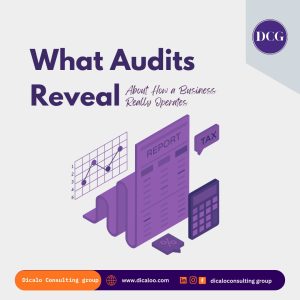
What Audits Reveal About How a Business Really Operates

For many organizations, the word audit triggers one reaction: compliance.
It’s often viewed as a regulatory requirement, a routine annual process, or something to “get through” as quickly as possible.
But in reality, an audit is far more than a checklist exercise.
When approached strategically, audits provide deep insight into how a business truly operates – beyond what dashboards and management reports may show.
Audits Go Beyond the Numbers
At the surface level, audits examine financial records. But underneath that review lies something more significant: a clear picture of how well your systems, controls, and governance structures function.
An audit reveals:
- Whether financial reports accurately reflect performance
- The strength (or weakness) of internal controls
- Gaps in compliance and regulatory alignment
- Operational inefficiencies that affect profitability
- Risk exposure areas that leadership may not fully see
In many cases, audits uncover patterns that routine internal reporting overlooks.
Internal Controls: The Hidden Foundation
Strong internal controls are the backbone of a healthy organization. They protect assets, ensure accuracy in reporting, and reduce fraud risk.
An audit tests whether those controls:
- Are properly designed
- Are consistently implemented
- Are monitored effectively
If controls exist only on paper but not in practice, an audit will expose that gap.
Financial Accuracy and Transparency
Reliable financial information is critical for:
- Strategic decision-making
- Attracting investors
- Securing financing
- Maintaining stakeholder trust
An audit assesses whether the financial statements truly represent the organization’s position and performance. This level of transparency builds credibility – both internally and externally.
Compliance and Risk Management
Regulatory environments continue to evolve. Tax laws change. Industry requirements tighten. Governance expectations grow.
Audits help organizations:
- Identify compliance gaps early
- Avoid costly penalties
- Strengthen governance structures
- Improve documentation and reporting standards
The earlier risks are identified, the less expensive they are to resolve.
Operational Efficiency and Profitability
Beyond compliance and reporting, audits often highlight operational issues such as:
- Revenue leakages
- Duplicate processes
- Weak segregation of duties
- Inefficient approval systems
These inefficiencies can quietly drain resources and reduce profitability over time.
By addressing them proactively, businesses improve both performance and sustainability.
The Strategic Value of an Audit
Forward-thinking organizations do not view audits as a threat.
They see them as:
- A performance diagnostic tool
- A governance enhancement mechanism
- A confidence-builder for investors and stakeholders
- A foundation for long-term growth
An audit provides clarity. And clarity leads to better decisions.
————————————————–
What gets examined gets improved.
An audit does not just evaluate financial records – it reveals how a business truly operates behind the scenes.
The question is not whether audits are necessary.
The question is: Are you using them strategically?
When approached correctly, audits become a powerful tool for strengthening systems, improving accountability, and building sustainable growth.